


Table of Contents
- Unlocking Flexibility
- Key Components
- Polymer Selection
- Wax Optimization
- Tailored Formulation
In 2026, industrial manufacturing demands materials that can adapt to dynamic environments without failing. A rigid bond is no longer sufficient; elasticity and resilience define modern engineering success. Adjusting hot-melt adhesive ingredients is the definitive approach to preventing premature cracking and ensuring long-term durability under mechanical stress. Achieving this requires moving beyond generic recipes and applying precise, scientific modifications to the core formulation.
Unlocking Flexibility 🔓
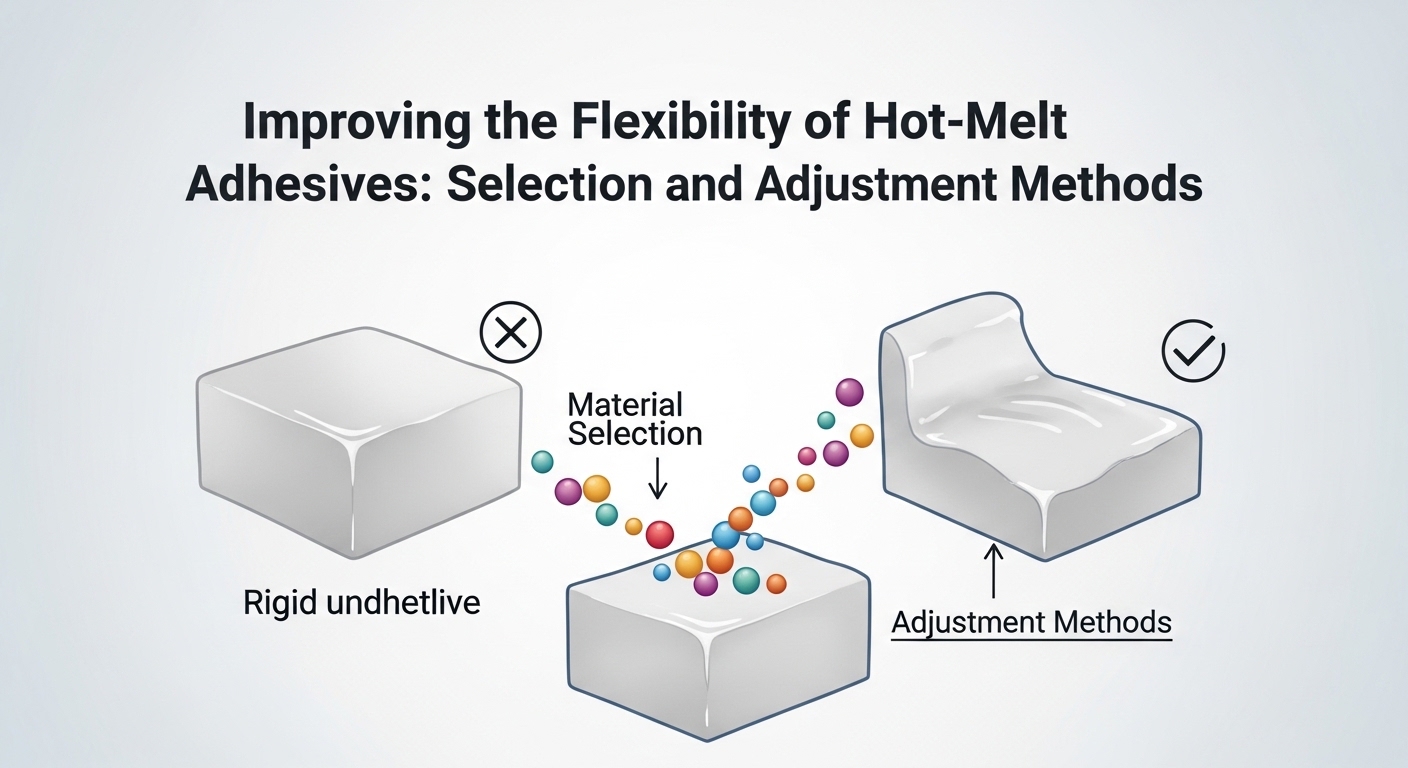
Flexibility determines how well an adhesive absorbs physical shock, thermal expansion, and mechanical stress over time. When formulations lack sufficient elasticity, the polymer matrix becomes brittle, leading to structural failure. Modifying the balance of hot-melt adhesive ingredients directly lowers the glass transition temperature, reducing inherent brittleness at a molecular level. Engineers must approach this challenge by evaluating the complex interaction between base polymers and various resins. Relying on scientifically validated ratios ensures that the adhesive maintains its integrity even in high-stress applications.
- Core objective: Lowering the glass transition temperature of the polymer matrix.
- Primary mechanism: Reducing inherent brittleness through material substitution.
- Actionable approach: Balancing polymers, plasticizers, and tackifiers systematically.
Key Components 🧪
The structural foundation of any chemical formulation dictates its absolute mechanical limits. Four primary categories constitute the essential hot-melt adhesive ingredients: base polymers, plasticizers, waxes, and tackifying resins. The base polymer provides the primary cohesive strength, while plasticizers act as the most direct ingredient for increasing overall flexibility. Waxes primarily control the melt viscosity, and tackifiers dictate initial surface adhesion. Modifying these specific elements fundamentally alters the physical properties of the final product.
| Component | Primary Function | Flexibility Impact |
|---|---|---|
| Base Polymer | Structural strength | Determines baseline elasticity |
| Plasticizer | Matrix softening | Most direct flexibility enhancer |
| Wax | Viscosity control | High-melting types reduce pliability |
| Tackifier | Surface adhesion | Must be compatible to maintain softness |
Polymer Selection 🔗
Selecting a softer polymer fundamentally alters the baseline adhesive properties. For instance, increasing the vinyl acetate (VA) content directly controls and enhances flexibility in specific systems. Formulations utilizing a higher VA proportion yield softer, much more resilient bonds capable of withstanding dynamic movements. Additionally, increasing plasticizer content effectively weakens intermolecular forces, allowing for greater molecular mobility. Formulations generally incorporate plasticizers at specific proportions to maximize toughness without compromising structural integrity.
Increase the vinyl acetate content (typically between 20% and 40%) in specific polymer systems to achieve a softer, highly resilient adhesive profile.
Wax Optimization 🕯️
While base polymers form the flexible core, wax and tackifier optimization remains equally critical. High-melting waxes frequently introduce unwanted crystalline brittleness into the cured adhesive matrix. To effectively counter this issue, engineers proactively switch to lower-melting alternatives like microcrystalline waxes, which are significantly more flexible. Similarly, tackifying resins must perfectly align with the overall flexibility goals of the specific application. Furthermore, strictly minimizing rigid fillers prevents the formulation from becoming unnecessarily stiff.
| Material Type | Recommended Action | Outcome |
|---|---|---|
| High-Melting Wax | Reduce or eliminate | Prevents unwanted brittleness |
| Microcrystalline Wax | Increase proportion | Enhances amorphous flexibility |
| Rigid Fillers | Minimize usage | Maintains core elasticity |
Tailored Formulation 🛠️
Practical industrial application requires a comprehensive view of the entire chemical formulation. The precise synergy among various hot-melt adhesive ingredients dictates the final performance in demanding real-world scenarios. Professionals must systematically evaluate the specific mechanical requirements of their assembly lines and adjust the delicate balance accordingly. By deliberately integrating precise ratios and selecting highly flexible components, manufacturers can successfully design custom bonding solutions. This data-driven approach guarantees substantial quality improvements and maximum operational reliability throughout 2026.
Avoid arbitrary mixing; applying rigorous scientific principles and precise material ratios is strictly required for reliable performance improvements.