


Table of Contents
- Bond Strength Basics
- Polymer Optimization
- Surface Treatment
- Solving Challenges
- 2026 Best Practices
Have you ever encountered unexpected bonding failures on a high-speed production line? Addressing these issues requires more than simply increasing the amount of glue applied. In 2026, achieving consistent hot-melt adhesive bond strength relies on a precise scientific approach. It involves a systematic evaluation of chemical formulations, material compatibility, and application environments. Understanding the mechanics behind these variables allows engineers to prevent product failures, reduce material waste, and streamline manufacturing processes effectively.
Bond Strength Basics 🔗
Securing reliable hot-melt adhesive bond strength requires a delicate balance between two primary physical properties. The first property is adhesion, which dictates how well the molten material attaches to the target substrate. The second property is cohesion, representing the internal structural integrity of the adhesive itself once it cools and solidifies.
When these two forces operate in harmony, the resulting bond withstands external stress and environmental changes. If cohesion is too high while adhesion remains low, the adhesive may peel off cleanly from the surface. Conversely, high adhesion with poor cohesion leads to internal tearing of the adhesive layer. Maintaining this equilibrium requires careful selection of raw materials and precise control over application parameters.
| Property | Definition | Primary Focus |
|---|---|---|
| Adhesion | Surface attachment capability | Substrate wetting |
| Cohesion | Internal structural strength | Polymer structure |
Polymer Optimization 🧪
Modifying the base formulation directly impacts the final performance. Standard mixtures typically consist of polymers at 30 to 50 percent, tackifier resins at 30 to 40 percent, and waxes at 10 to 30 percent. Polymers provide the structural backbone, tackifiers deliver the initial grab, and waxes control the melt viscosity and setting speed.
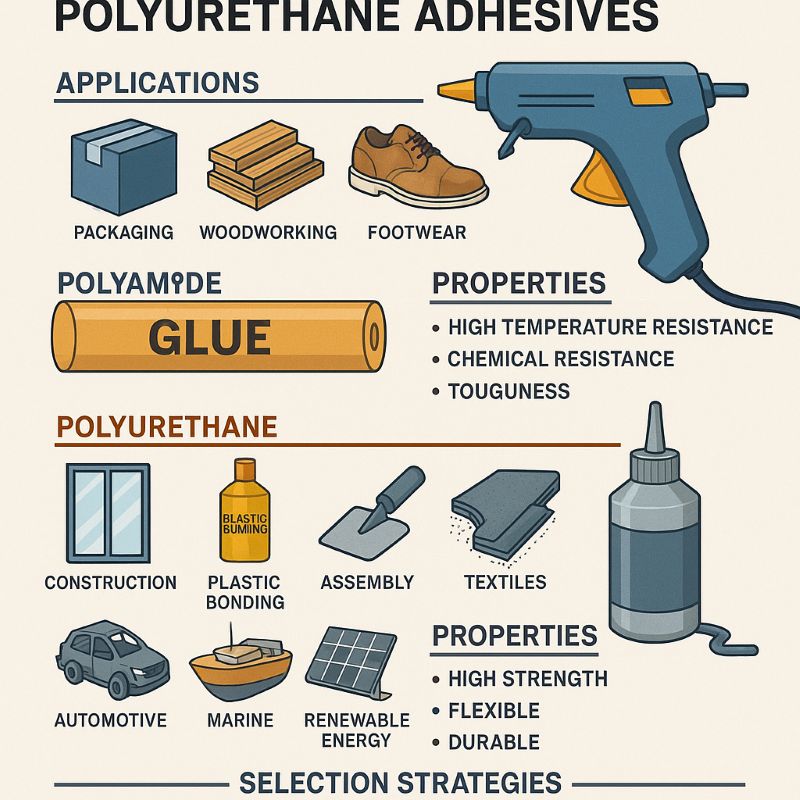
Upgrading to high-performance base materials, such as polyurethane, significantly alters the performance metrics. Furthermore, minor additive adjustments yield measurable results. Introducing just two percent of fumed silica into the mixture can improve shear strength by roughly 14.3 percent. Engineers must evaluate these formulation changes based on specific application requirements.
Match the polarity of the tackifier resins to your specific substrate. This chemical alignment enhances surface wetting and maximizes the resulting bond strength without requiring major structural changes to the base polymer.
Surface Treatment 🧽
Even the most advanced formulation fails if the substrate surface rejects the molten material. Surface preparation directly influences how effectively the adhesive spreads across the target area. Poor spreading leads to weak contact points and eventual bond failure.
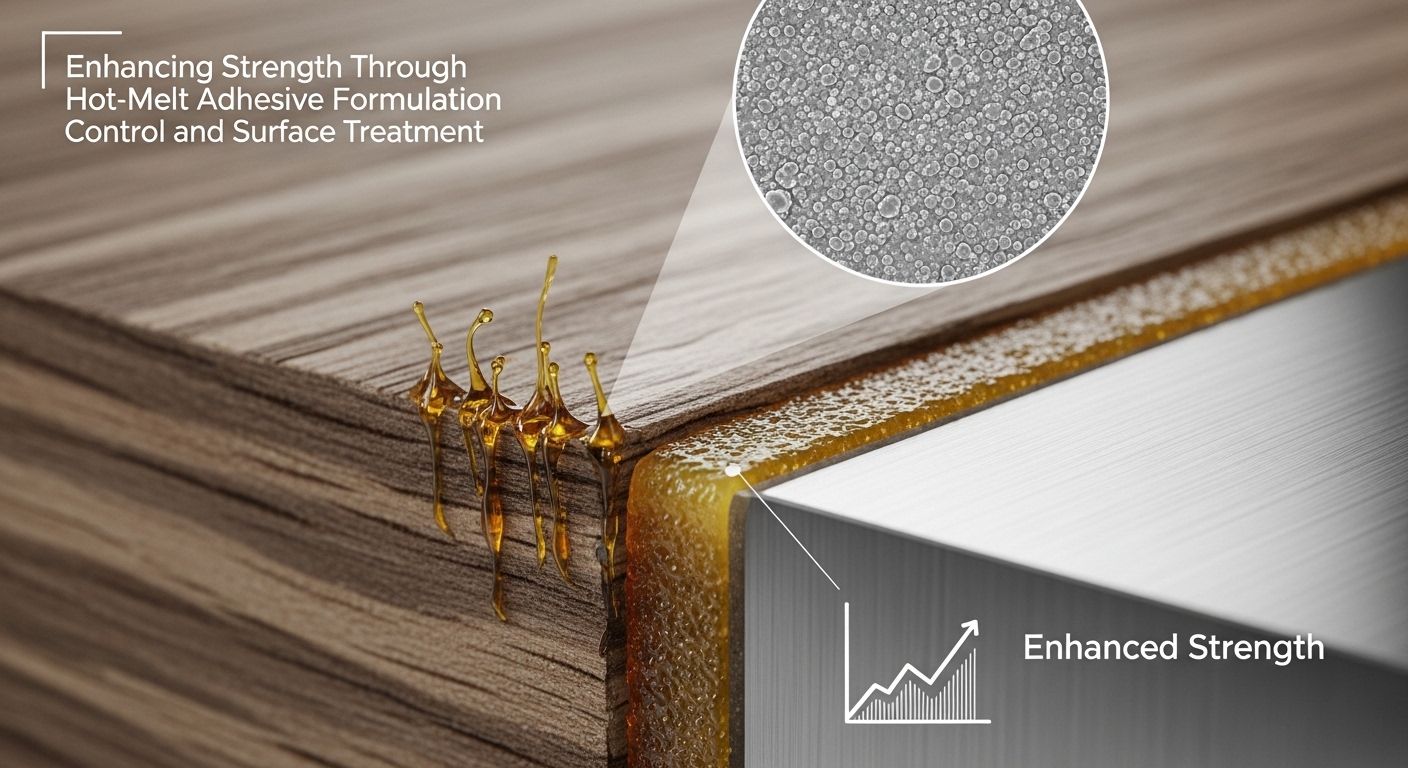
Implementing proper surface treatments alters the surface energy of the substrate. Techniques such as corona discharge, plasma treatment, or the application of chemical primers modify the molecular structure of the surface. These modifications allow the adhesive to penetrate microscopic pores, creating a mechanical interlock that significantly boosts the overall adhesive performance.
- Clean surfaces remove contaminants that block adhesion.
- Plasma treatments increase surface energy for better wetting.
- Chemical primers create a bonding bridge between incompatible materials.
Solving Challenges 🛠️
Diagnosing bonding issues on the production floor requires analyzing the specific failure mode. When an adhesive separates cleanly from the substrate, it indicates fundamental compatibility issues or insufficient surface wetting. In these cases, adjusting the application temperature or changing the tackifier type provides a viable solution.
If the adhesive breaks apart internally, leaving residue on both substrates, the internal cohesion is insufficient. Resolving this requires increasing the molecular weight of the base polymer or adding reinforcing fillers. Identifying the exact failure mechanism guides technicians toward the most effective formulation strategy.
| Failure Mode | Probable Cause | Actionable Solution |
|---|---|---|
| Clean Peel | Poor surface adhesion | Improve surface wetting |
| Internal Break | Low internal cohesion | Increase polymer weight |
| Stringing | Incorrect temperature | Adjust application heat |
2026 Best Practices 🏆
Maximizing performance in 2026 demands an integrated approach to process control. Formulators and production engineers must synchronize material composition with application conditions. Application temperature dictates the viscosity, which in turn controls how well the adhesive penetrates the substrate.
Adequate pressure during the mating process ensures optimal contact area before the adhesive cools. Manufacturers achieve the highest hot-melt adhesive bond strength by establishing strict parameters for polymer ratios, surface energy verification, and precise thermal management. Continuous monitoring of these variables guarantees consistent production quality.
Never exceed the recommended application temperature to lower viscosity. Overheating degrades the polymer chains, significantly reducing the final internal cohesion and compromising the entire bond structure.