


Table of Contents
- Understanding Hot Melt Adhesives and Their Eco-Friendly Evolution
- "Recyclable" vs. "Recycling-Compatible": A Critical Distinction
- Decoding Certifications and Eco-Labels
- Key Technologies Driving Eco-Friendly Adhesives
- 2026 Selection Guide and Future Trends
In 2026, as companies worldwide double down on their sustainability goals, the environmental impact of every component in the supply chain is under scrutiny—right down to the glue. The term "eco-friendly hot melt" has become a common buzzword in packaging, labeling, and product assembly. However, this broad label often masks a complex reality. Does choosing an eco-friendly adhesive guarantee it can be recycled? The answer is not as simple as a yes or no. For professionals aiming to make genuinely sustainable choices, understanding the nuances behind these claims is no longer optional; it's a necessity for building a credible circular economy strategy.
Understanding Hot Melt Adhesives and Their Eco-Friendly Evolution 🔬
Hot melt adhesives are thermoplastic polymers that are applied in a molten state and form a strong bond upon cooling. For decades, their reliability and fast setting times have made them indispensable in everything from sealing cardboard boxes to assembling furniture. However, traditional formulations, often based on synthetic polymers like Ethylene-Vinyl Acetate (EVA), pose a significant challenge to recycling processes, acting as contaminants that can ruin entire batches of recycled material.
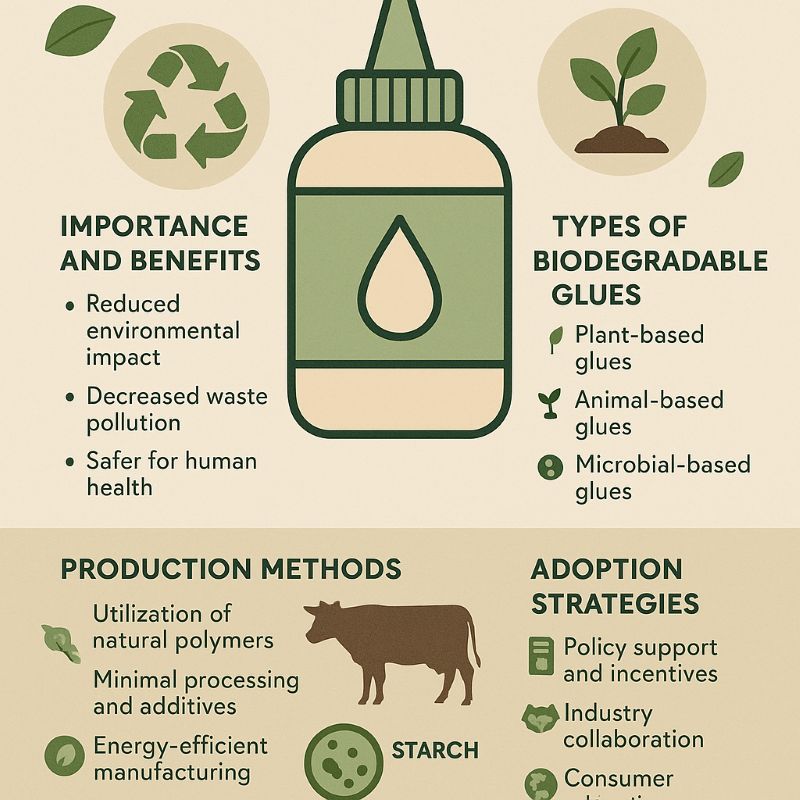
The growing demand for sustainable solutions has spurred the development of eco-friendly hot melt adhesives. This category is not monolithic; it encompasses several distinct technological approaches designed to minimize environmental impact. These innovations generally fall into a few key categories: those made from renewable resources, those designed to break down harmlessly, and those engineered to integrate seamlessly with existing recycling streams. Understanding these differences is the first step toward making an informed decision.
💡KEY POINT
- Bio-based Hot Melts: Formulated with a significant portion of raw materials derived from renewable sources like plants, reducing reliance on fossil fuels.
- Biodegradable/Compostable Hot Melts: Designed to break down into natural elements under specific industrial composting conditions, leaving no toxic residue.
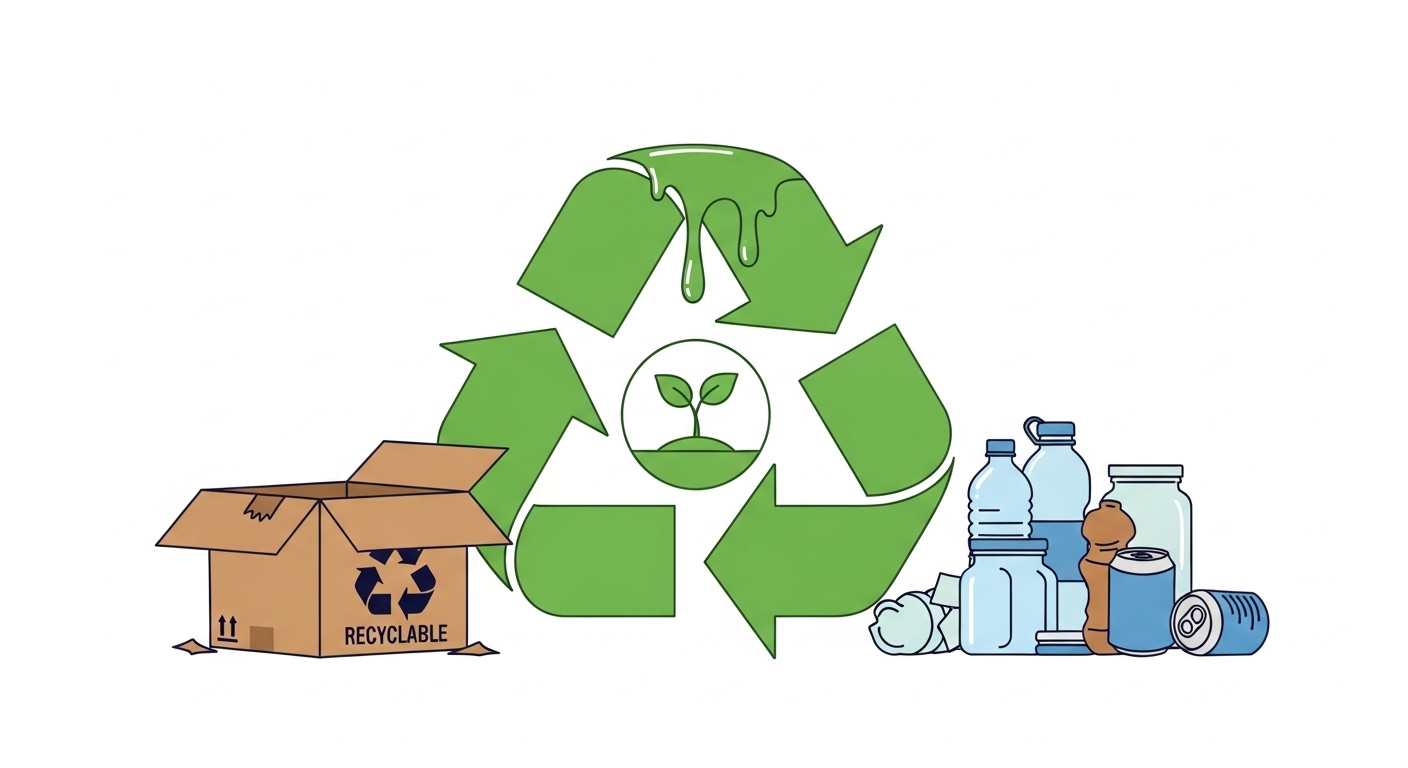
- Recycling-Compatible Hot Melts: Engineered to not interfere with the recycling process of the primary material (like paper or plastic) they are applied to.
"Recyclable" vs. "Recycling-Compatible": A Critical Distinction ♻️
One of the most significant points of confusion in the market is the difference between an adhesive being "recyclable" and "recycling-compatible." The terms are often used interchangeably, but they describe fundamentally different end-of-life scenarios. A truly "recyclable" adhesive would be recovered and reprocessed into new adhesive, a practice that is exceedingly rare for hot melts today.
The far more common and impactful characteristic is "recycling-compatibility." This means the adhesive is designed to be easily separated from the substrate during the recycling process. For example, in paper recycling, a compatible adhesive will dissolve or be effectively screened out during the pulping stage, allowing high-quality paper fibers to be recovered without contamination. This distinction is crucial because the primary goal of sustainable packaging is to recycle the main material (the box, the bottle, the label paper), not necessarily the minuscule amount of adhesive used. An incompatible adhesive can render the entire product non-recyclable.
| Feature | Truly Recycled Adhesive | Recycling-Compatible Adhesive |
|---|---|---|
| End-of-Life Focus | The adhesive material itself is recovered and reused. | The primary packaging material is recovered without contamination. |
| Primary Goal | Create a closed loop for the adhesive polymer. | Enable a clean and efficient recycling stream for the substrate. |
| Practicality in 2026 | Technologically challenging and not widely available. | The current industry standard for sustainable adhesives. |
Decoding Certifications and Eco-Labels 📜
Given the ambiguity of marketing terms like "green" or "eco-friendly," third-party certifications are essential tools for verifying a product's environmental claims. These labels provide objective, standardized proof that an adhesive meets specific criteria for biodegradability, compostability, or compatibility with recycling systems. For any purchasing manager or sustainability professional, learning to read these labels is a non-negotiable skill.
When evaluating a hot melt adhesive, look for specific standards rather than vague promises. For compostability, certifications like EN 13432 (Europe) or ASTM D6400 (USA) are the gold standard, ensuring the product will fully biodegrade within a set timeframe in an industrial composting facility. For recycling compatibility, there isn't one single global standard, but reputable suppliers often provide test results from independent institutes that confirm their products' performance in specific recycling streams (e.g., paper repulping or plastic washing). Always demand documentation to back up any environmental claim.
When in doubt, always request the Technical Data Sheet (TDS) and Material Safety Data Sheet (MSDS) from the supplier. A truly eco-friendly product will have its certifications and compatibility test results clearly documented. If a supplier cannot provide this evidence, treat their claims with skepticism.
Key Technologies Driving Eco-Friendly Adhesives 💡
The innovation in eco-friendly hot melts is driven by several key technologies, each tailored to a specific application and recycling process. Understanding these technologies helps professionals select the right adhesive for their unique needs, ensuring that their sustainability efforts are effective.
Wash-off Adhesives are a prime example. These are engineered for products like PET bottles with paper or plastic labels. During the recycling process, the bottles are ground into flakes and washed in a hot alkaline bath. A wash-off adhesive dissolves completely, allowing the label and adhesive to separate cleanly from the valuable PET flakes. This prevents contamination and maximizes the yield of high-quality recycled plastic.
Repulpable Adhesives are designed for paper and cardboard applications. In the paper recycling mill, materials are mixed with water in a large vat to create a pulp slurry. Repulpable adhesives are formulated to break down into fine particles that can be screened and filtered out, preventing the formation of sticky contaminants (known as "stickies") that can clog machinery and reduce the quality of the final recycled paper product.
⚠️CAUTION
A "bio-based" adhesive is not automatically "biodegradable" or "recycling-compatible." While using renewable resources is a positive step in reducing carbon footprint, the end-of-life performance depends entirely on its chemical formulation. A bio-based adhesive can still be a contaminant in a recycling stream if it is not specifically designed for compatibility.
2026 Selection Guide and Future Trends 📈
Choosing the right eco-friendly hot melt requires a holistic approach that balances performance, cost, and true environmental benefit. As we look ahead in 2026, the market is moving towards greater transparency and specialized solutions. Regulations are becoming stricter, and consumer awareness is at an all-time high, pushing manufacturers to adopt genuinely sustainable practices. The future likely lies in the growth of mono-material packaging, where adhesives are made from the same polymer family as the substrate, simplifying recycling even further.
For practitioners making decisions today, a systematic evaluation is key. The focus must shift from simply asking "Is it eco-friendly?" to asking "Is it compatible with my product's end-of-life scenario?" This ensures that the chosen adhesive is not just a green label, but an active contributor to a functional circular economy.
| Consideration | Key Question to Ask | Why It Matters |
|---|---|---|
| Substrate Material | What material am I bonding (e.g., paper, PET, glass)? | The adhesive must be compatible with that specific material's recycling stream. |
| Recycling Process | How will this product be recycled (e.g., pulping, washing)? | This determines whether a repulpable, wash-off, or other type of adhesive is needed. |
| Official Certifications | Does the adhesive have recognized third-party certifications? | This provides objective, verifiable proof of its environmental performance claims. |
| Operational Needs | Does it meet bonding strength and application speed requirements? | Sustainability cannot come at the expense of product integrity and manufacturing efficiency. |